

Since posting I am a gymnastics addict in 2020, I’ve practiced my gym habit two to three times a week. My goal in my 50s is to maintain the gains that I have accomplished. And once in a while, I try to master a new trick or two.
Original post: January 2022. Revised: June 2025
The funny thing about gymnastics is that once you have completely mastered a skill, it sets in your body. Even when a long time has passed, it doesn’t take long for a previously mastered skill to return. The brain-building process for that skill has been set. All it takes is for the body to catch up to what you already know.
Think about a child learning to walk. They crawl around for a while on all fours, until they pull themselves up on the couch cushion. Eventually, they realize it’s much more efficient to move around on two feet.
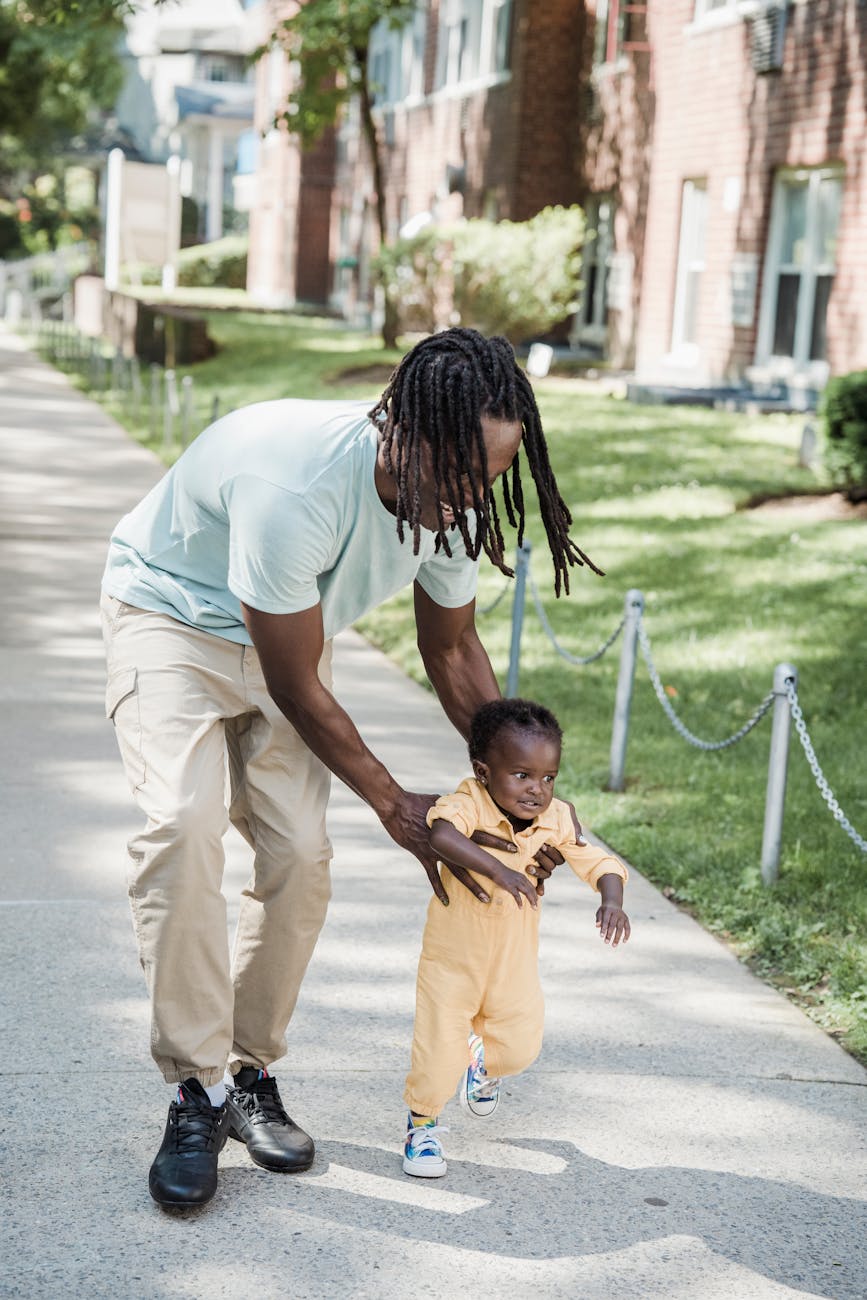
They go through the developmental process of figuring out how to balance and ambulate at the same time. Of course, it doesn’t happen overnight (though any parent of a toddler will disagree). But, when that becomes the primary manner of getting around, they never look back.
Mastery takes time
Mastery isn’t about doing something successfully once or twice. It requires successful attempts through hundreds of trials over years and years. Learning new skills often feels like the toddler learning to walk. They get up, take a few wobbly steps and fall back down again.
Gaining a gymnastics skill is quite clumsy in the beginning. You don’t master it until you’ve developed the strength and coordination for your body to be reliably consistent. Then, like the toddler who’s figured the walking thing out, there’s no stopping you!
In order to master anything, you must have these keys elements:
- the desire to take on a challenge
- the understanding of the process of making the new habit
- the physical capacity to withstand the demands of that challenge
There’s a saying that my original coach always said that sticks in the back of my head. Once is luck, twice is coincidence, three times is skill. It’s quick and catchy, and it has been proven right on many occasions. I would add to that: a hundred times is mastery.
Mastery is the seamless integration of a checklist of skill essentials. The essentials are what you need to practice in order to successfully, safely and consistently complete a challenge. As the mastery level increases, the fear factor fades, and the skill becomes a part of your normal progressions.
Of course, mastery at one time doesn’t always guarantee future success. Look at Simone Biles. At the 2021 Olympics, she got a nasty case of the twisties, due to the extraordinary pressures of her life. Even the GOAT, who has mastered most every gymnastic skill under the sun (including creating a bunch of her own creation), experienced road blocks in her training and performance.
Back to my Geriatric Gymnast perspective. In my limited scope of gymnastics accomplishments, I have mastered a few things. Take, for example, a basic back tuck on the trampoline. This is the basic checklist that I follow:
- Set arms high, shoulders over hips over heels. Breathe!
- Focus on the wall in front of you.
- Circle arms for power and momentum, get your arms back overhead.
- Send your hips forward, then quickly tuck your knees to your shoulders as you start the flip.
- Place your hands on your knees or hold your thighs as you rotate backwards.
- See the trampoline then see the wall as you finish your rotation.
- Open up the tuck and land safely!
That’s a lot of things to think about for a skill that happens in two seconds. When you start a new move, that checklist is a blur. It is impossible to process all of that in mere seconds. That’s too confusing and the brain pathways aren’t ready to process all of that information at once. When you’re an adult, the “old dog, new trick” adage often feels like it applies directly to you.
Progress is never linear
It took me years to master that one move.
In the beginning, I’d bounce and chuck my body backwards, hoping for the best. I landed all over the place. Once, I threw it really poorly. My leg wound up wedged in between the frame of the trampoline and the wall. Ouch. My shin was badly bruised for weeks. I can’t recall exactly how I wound up in that precarious place. Let’s just say, I stopped trying back tumbling for quite some time after that. It took me many months to muster the courage to try again.
When I decided to try again, I was starting from the beginning again. It’s not that I forgot how to do it. It was because I hadn’t mastered safe technique to make my brain feel safe. My Lizard brain caused a bit of a fear-induced shutdown for that skill. It basically goes into a self-protective mode so you don’t do more damage to your body.
Building back better
When Lizard Brain takes over, you have to go back to square one, taking the smallest of wobbly baby steps.
I used the belt, a mechanical assist. A padded belt is strapped to your waist. It’s like a corset that cuts off your lung capacity with two metal loops that attach to pulley ropes. Your coach stands on the side of the tramp, holding the other end of the ropes. When you throw the move, the coach gives you a lift if needed, preventing you from landing on your head.
Returning to back tucks as I recovered from an Achilles tendon rupture in 2025. I used the belt to convince my brain that I was safe.
Working in this way for a long time enables you to develop your technique slowly. You identify problem areas that you can correct in a safer, more supported manner.
One of my original problems was that I pushed harder off of one foot than the other on the takeoff. This would send me askew every time I landed. It was a problem in my back handspring as well. It was a minuscule and hard-to-detect issue, but once I became aware of it, things started to change. Though I had been doing it wrong for years, paying attention to that foundational mistake helped me make regular adjustments.
Over time, I recalibrated my checklist, and it straightened out the landing. Now, if I land off center, I know exactly why and make a quick correction.
Even Simone’s twisties were eventually remedied through extensive mental health interventions. The theory is the same: fix the underlying, fundamental issue, then maybe the problem will correct itself.
Aging and Lizard Brain
Of course, in your 50s, mastering a new skill becomes tricky. Lizard Brain is in ongoing protective mode as I experience more injury. I’ve dealt with wonky rotator cuffs and hips, a broken foot, an Achilles rupture, to name a few.
I am very cautious when I try something new. Because mastery requires so much time in trial, error and repetition, my body takes a beating if I’m not careful. The risk of re-injuring my wonky joints is pretty high.
Since I have no interest in taking extended training breaks from injury, I am selective with attempting new skills. If it develops strength or flexibility (which I really need), I’m in. If it requires too much force in the wrong direction, I steer clear. It’s really a matter of training smarter, not harder. Ample recovery is also an important piece of this puzzle.
Applying my teacher training
Being a teacher for decades has also helped me to learn new skills. I frame learning challenges the way a teacher does. We analyze problems and break them down into its smallest, most fundamental parts.
- What do you really need to know and do in order to move forward (or flip backward)?
- What is missing, or what is extraneous?
- What knowledge do I need to apply so I can be safe and avoid a mental shutdown?
- Do I have the physical fundamentals to land on my feet?
Then we attack the parts one by one, from many angles.
When I put my teacher hat on as a learner, I make better use of my time and effort. It definitely takes a long time to develop new skills. But, working in this way keeps me from breaking my neck, and helps me to keep others safe as well.
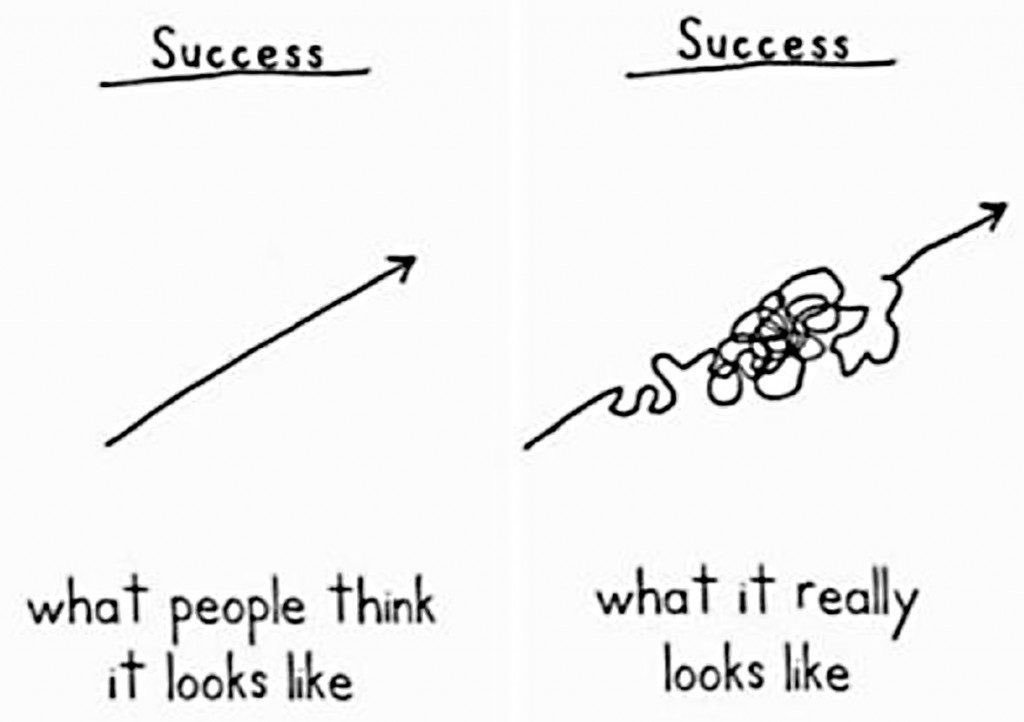
One last thought: one of my favorite hashtags is #progressisntlinear. It is a truism that reminds me to tolerate backslides and trust the mental and physical training I’ve developed over many years.
The road to mastery is long and has many obstacles along the way. I’ll be talking about those and lots of other topics in future chapters of this Geriatric Gymnastics series. I hope my stories help you reflect on your own experience, and inspire you meet new challenges at any age!
Read more about my Geriatric Gymnastics escapades in Chapter 3: Managing Fear

 Stacey's Headspace
6 thoughts on “The road to mastery”