
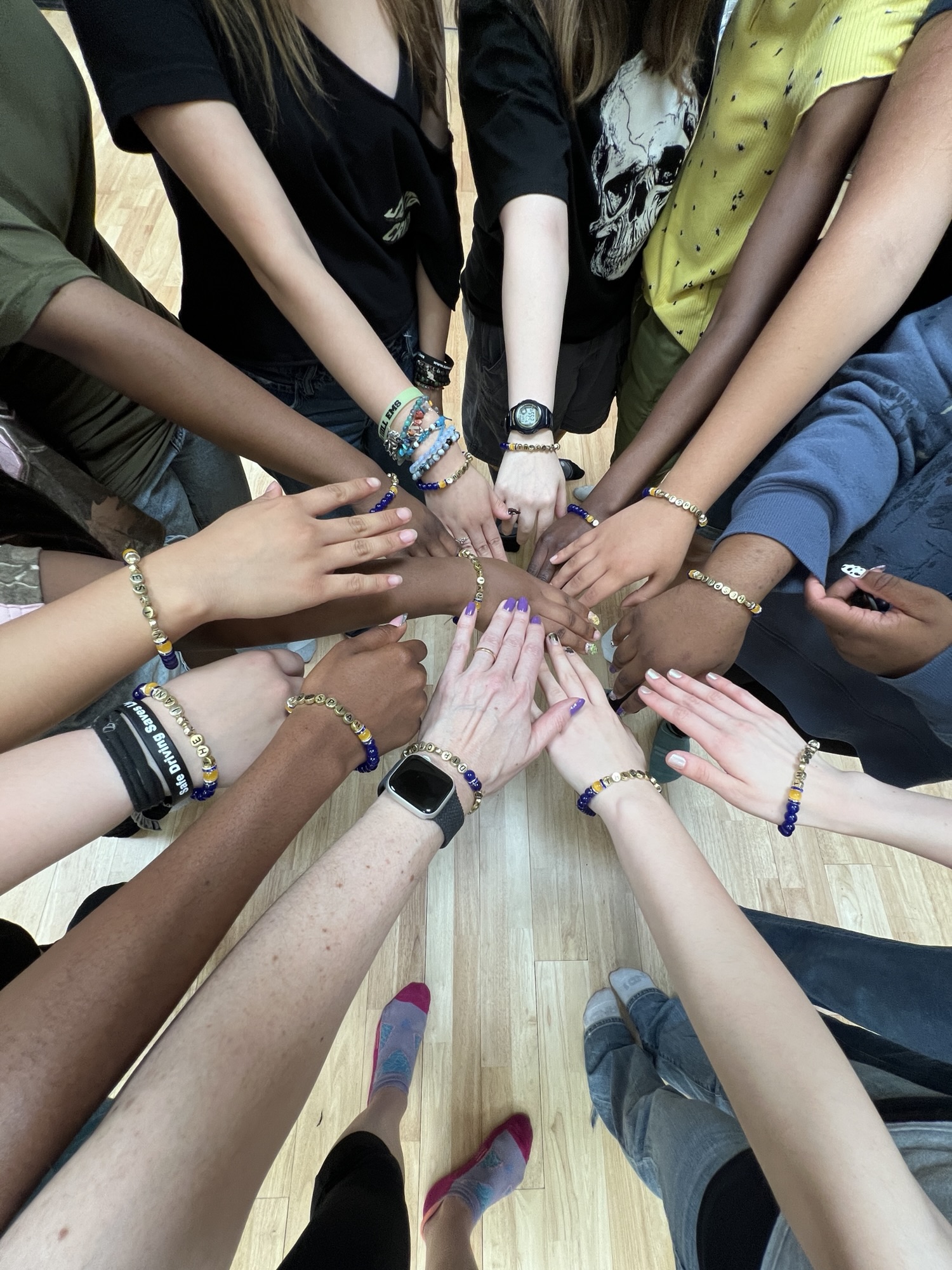
In March 2022, I had a burst of inspiration and motivation to pay homage to the people with whom I had shared creative space in the studio.

For about a year and a half, I worked hard on a podcast idea called Changed For The Better: The Power of Arts in Education. It was a series of interviews with my former students that discussed our shared creative experiences when they were in high school.
That May, I wrote a post called Changed for the Better: The Value of Arts in Education. It was a love letter to the educational activities that I thrived in as a student and eventually taught others to do the same. It was also a lament and clarion call in response to the continual struggle to keep the arts as an essential part of the educational process.
After thirty years of observation and experience, I am now entering my last year of teaching. Inspired to dig in a little more, I want to talk about the high value of arts in education with regard to the development of accountability to young people.
Kids can be taught accountability in many different ways. But, in my humble opinion, none are more transformative, no educational experience sticks with their forever hearts more than being a part of a show.
Whether it’s their first or zillionth show, the result of their participation is the same. When the arts are firmly entrenched in their educational universe, immeasurable improvements abound. Those experiences flood their soul with pride. It makes them step up when they’d otherwise hide in a corner. It takes the phone out of their hands and makes them want to create something funny, beautiful, driving, and dramatic.
Let’s look at the process of encouraging accountability through arts education.
Out of the shadows, into the spotlight
Why do kids turn inward and want to hide? Mostly because they are afraid of rejection and being reminded that they are the terrible things they often think about themselves.
Sports activities offer growth and accountability through teamwork, skill-building and fitness. They seem to be associated with more “socially acceptable” spaces for kids to thrive. The caveat for most kids: the element of competition. While some kids thrive in competitive situations, many do not.
The arts gives them a route to (sometimes forcibly) find the parts of themselves that are useful, creative, compelling, competent and beautifully complex. I say forcibly in jest, because many of them are dragged in kicking and screaming by their friends who are momentarily a little more brave than they are. Once they start to engage, they see the light and start running towards it. Even the sporty-sport kids find their creative light.
If there’s a space for everyone in arts education, why do so many kids initially shy away? What makes the arts so frightening and enticing in the same breath?
Breaking the cocoon
From the outside, arts activities look weird, and that’s the last box kids want to be shoved into. But, when they are allowed to tap into that part of themselves that’s a little different, once they acknowledge and are valued for those quirks and talents that they work so hard to keep buried, the cocoon bursts open.
The arts requires all of their wonderful weirdness and puts it to good work. All of their hushed “out of the box” thinking shifts them from the feared marginal outcast designation to a necessary driver of progress.
I’ve seen that butterfly transition a thousand times over, and it is absolutely gorgeous and divine.
Engaging in risky business
Much of the fear associated with the arts is that they require you to take risks. Emotional ones. You need to have ideas, voice them and know those ideas may not be implemented. You have to make yourself vulnerable in front of other people. You have to accept that mistakes are the norm and the pathway to improvement. You have to accept that you might just be good at something you never imagined you’d be good at.
All of the esoteric truths embedded in the arts can only be understood once you have taken some part in them. Kids without that experience have no emotional foothold to trust that they’ll be okay committing to the steep climb of being a part of a show. They don’t yet know that the community will embrace them and catch them if they fall.
Creation, without competition
In arts education, the overall goal is not to compete with anyone else. It’s for all of the different facets to work as a unit to make the best show possible to put on display for their community.
Through that lens, students identify their many different strengths and drive them deep into an ongoing activity. They are appreciated for the quirks and talents that ultimately define their identity in real time. They can sing out loud, paint in a quiet corner, learn to read a Broadway score, program a light board; the jobs are plentiful and the arts require all types of skill sets to fill them.
They can feel safe exploring what they want on their own time, at their own pace. Some stay in one lane. Others switch gears, change cars, and get on and off to see all the sights, taking a jack of all trades, master of none approach. It’s all good.
Accountability through action
Kids don’t have much time to ruminate about their faults when they have rehearsal. There are show needs that require their undivided attention. Participants are a cog in the giant machine of creation. That machine needs them to put their phones down, focus, and effectively use their mental space.
They especially don’t have time to waste when they suddenly have to fill a role they weren’t initially prepared for. What do I mean? Here are a few examples:
- An ensemble member (or crew member) is a last second emergency replacement for the lead. This happened in AIDA when our lead collapsed at the end of act one and another student went on with a script and finished the show without a hitch. And again in PUFFS when our Cedric had family problems on night two and never returned.
- An unsuspecting someone steps behind the sound board for the first time and they have to run the show in a few days.
- A crew member has to fill in and move set pieces they’ve never moved before because someone didn’t show up to do their job.
Yes, all of these things have happened in our shows in my tenure. They were scary, seemingly impossible last-second asks for adolescents. The beauty of facing the scary moment is that the kids ALWAYS came through. They find their inner beast, step up and follow through. I’ve never had to cancel a show because someone didn’t show up. The show always went on because someone else did.
Capitalizing on the chaos of adolescence
Why are the arts so successful at setting kids up for success, even when the odds are stacked against it? Why are they more likely to pour themselves into rehearsals or tech meetings or stepping up when needed than into their math class?
All kids take math and science class because they have to. They do theater because they love to. Even the ones who are initially dragged in by their friends are eventually charmed by the magic of the audition-to-rehearsal-to-live production complex. They get to laugh and play while they work hard at something immense.
That magic is organized chaos, and I think many of them actually thrive in that environment. After all, the adolescent brain is nothing if not chaotic. It’s their internal status quo, even if they seem calm and collected on the outside. The secret sauce can be distilled in four words: Be prepared for anything.
Think about it. The average musical has about 20 scenes, 20 songs, 10-100ish actors, techies, musicians and production teams, a slew of committees, a bunch of adult leaders and volunteers (if you’re lucky), etcetera, etcetera. Think of the daily questions, personality clashes, financial challenges, weather events, personal problems: realities that can lead to near (or full) disasters that could explode at any moment. If that’s not chaos, I don’t know what is.
In the process of managing the process, kids must embody and embrace the idea that you-don’t-know-until-you-know-and-you’ll-know-when-we-figure-it-out-together. Not knowing all the answers is the norm. How many times have they asked me what’s happening next and I have to tell them something to the tune of, I don’t know yet, but you’ll know when I do. Maybe you can help me figure it out.
After all, isn’t that just a microcosm of the life we live everyday? Somehow, I think it’s a little less scary when they are an integral part of the brain trust that is figuring out the process of making the chaos more organized.
The way to organizing the mess to to be prepared for anything. Why do we need three months to put up a show? Because that is the minimum time required to organize the chaos just enough that everyone can pivot on a dime. When I make a sudden announcement that there’s a necessary change that they must implement, they have the emotional and mental reserve to make it happen.
Because they are prepared, they can feel confident stepping up and showing out. That’s a skill that stick with them forever.
Then, there’s the kudos
And when it’s all done, people applaud wholeheartedly for the work it took to organize the chaos. They’re clapping for the kid in the spotlight and the silent ninja holding up the tree in the background. For the kid who made their first costume or designed and painted the colorful geometric gemstones on the throne onstage. For the kid who sells refreshments and who played violin in their first pit orchestra and who artfully created the perfect makeup design.
They’re applauded for the hard-fought relationships and human connections they made.
They’re applauded for the ideas they offered and the myriad problems they helped solve.
They’re applauded for revealing the part of themselves their parents, teachers and friends had never seen before.
For that applause, they had to show up and show off their skill and talent that they cultivated every day for months. They had to learn that not all ideas work, but all ideas lead to the next idea that does. They had to think critically, in a world where AI is at their fingertips to answer their questions and solve their problems. They had to work with other people they don’t know, take direction from adults, and carve out a place for themselves.
They had to be accountable: to their community, to their peers, to their teachers, and MOST important, to themselves.
I cannot think of a greater reason for the arts to be pushed to the forefront of every child’s educational journey.
Being accountable to a new family
In every Changed For The Better chat, the word family was always reflected back to me. They find the comfort and support from people in the rehearsal studio that they ultimately define as a second home. It’s a place for themselves to belong and thrive.
Sometimes, it’s more comfortable to them than the family they come home to after school. It’s an honor to give them that temporary emotional respite as they navigate through that different kind of chaos.
Despite the noise and insanity their inner self brings, the arts can quiet the din and help them feel the embrace of love through creativity. Ultimately, when an adolescent feels at home, they feel more comfortable being accountable. Isn’t that exactly what we want for our teens?
Moving into this final carousel of chaos, I’m excited for one more year’s cycle of audition days through closing nights. I’ll lean into the strengths of my students, extract them as fully as possible, and make them responsible for as many things as their tolerance for work allows.
It’s both my job and my pleasure to make theater and dance geeks out of as many unsuspecting adolescents as I can get my hands on.
Some of the accountable faces through the years
Looking at my photo library, this is a tiny fraction of the moments that I got to share with the thousands of young creatives throughout my career. Their heads are held high, they are confident, and they didn’t all start that way. They are most certainly changed for the better for being a part of the effort.




What did you think?