

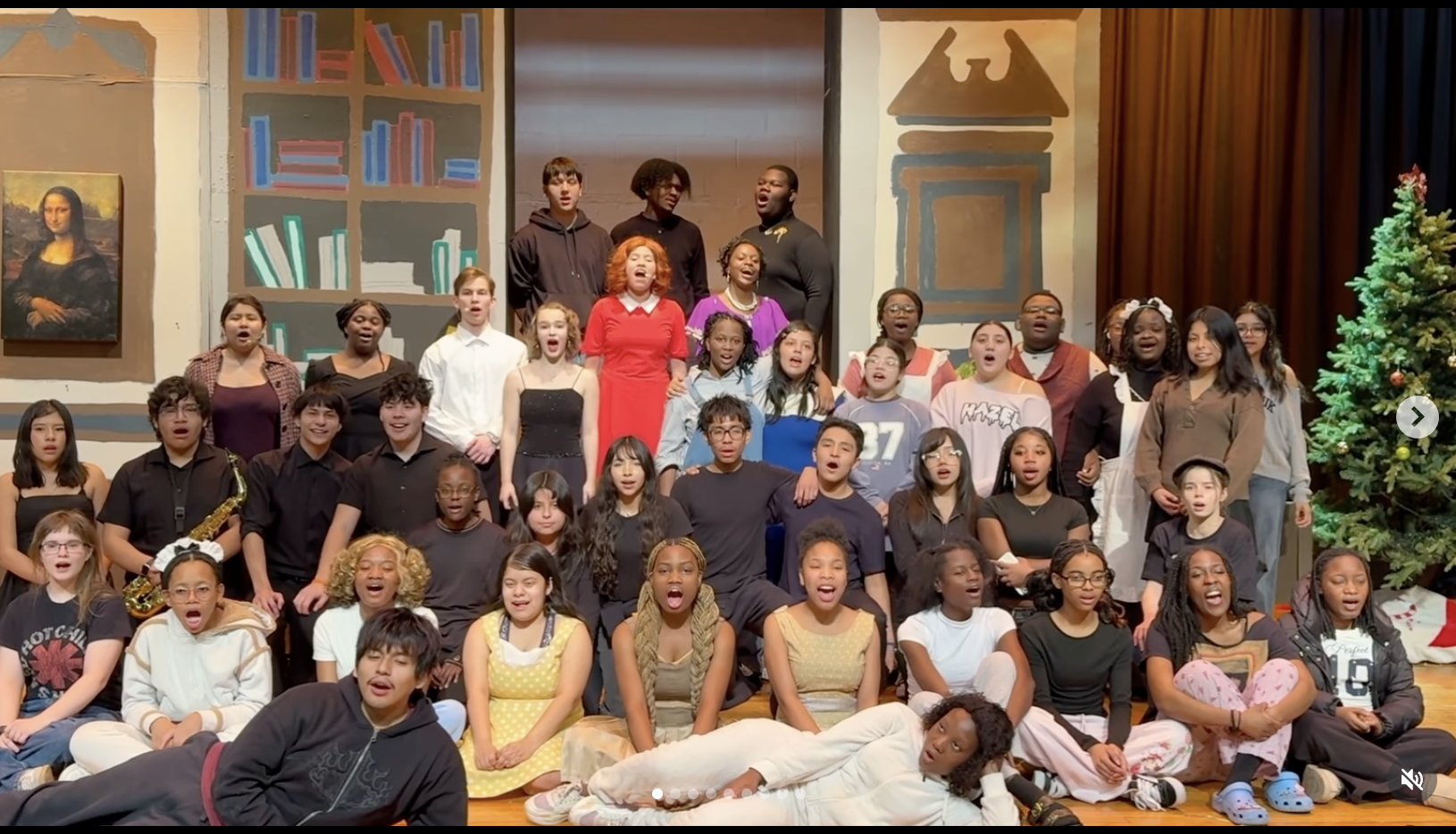
In 2020, we lost our spring show to COVID. That pandemic almost cost us our theater program. Six years later, hope springs eternal. ANNIE brought Thespian Troupe 721 the magic of victory.
I sat in the back of the theater, two hours before showtime on the second night of our run. There’s a light buzz of activity. Crew members setting and sweeping the stage. Cast members getting their costumes set. Over the speakers, I heard the sound crew chanting “one two, one two” as they calmly checked each microphone. They had the schedule and they were following it to the letter.
It’s the proof that when students are taught well, they can accomplish just about anything.
That moment was probably the first in many months where I had nothing to worry about. The show was set and in the hands of capable young people who understood their mission: do your job so we all shine bright. My job now was to monitor, be present for emergencies, and make sure I captured the magic on video (and didn’t screw it up).
How far we’ve come
For six years after we lost our spring musical Footloose to COVID, we were clawing our way through every show. We started with virtual productions, then chose smaller shows, and begged students to fill open roles as the casts got larger.
Read Triumphant Return, talking about our first live onstage musical post-pandemic.
It was hard on the soul to know how far we had been from the glory of the past. Pre-pandemic, we had to turn kids away. We did In The Heights, West Side Story and AIDA and the stage was overfilled with hungry theater kids seeking glory.
When we announced ANNIE, it was late in the game. We had a really hard time choosing a piece for this year, since we had scant few males, no students with outside performance training, and more limitations than ever. I couldn’t imagine how these students would have even heard of ANNIE, much less care to audition for it. And what would we do for Sandy the dog? It all felt like a huge risk, no matter what we chose.
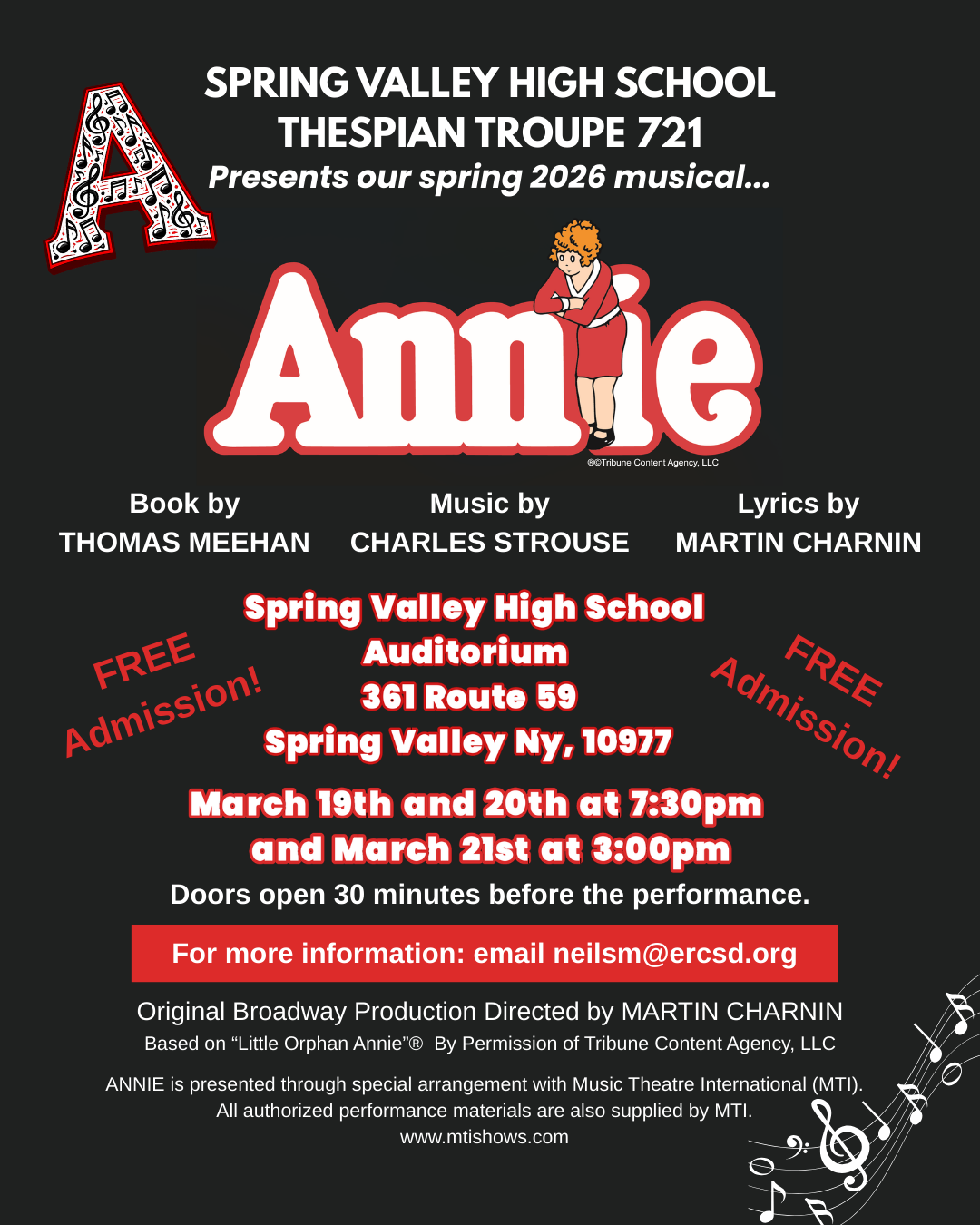
However, at the meeting to announce the spring production, I saw their eyes light up when they saw the famous logo on the smart board screen. To my shock and surprise, these kids were excited for this show.
By the grace of whatever universal forces were on my side, I had many returning seniors and many other new students come to auditions. It was a wealth of riches that I hadn’t experienced in a long time. I even had a perfect person to play Sandy dog. From the first day, I realized that this show might just be a turning point in the Thespian legacy.
Fast forward three months
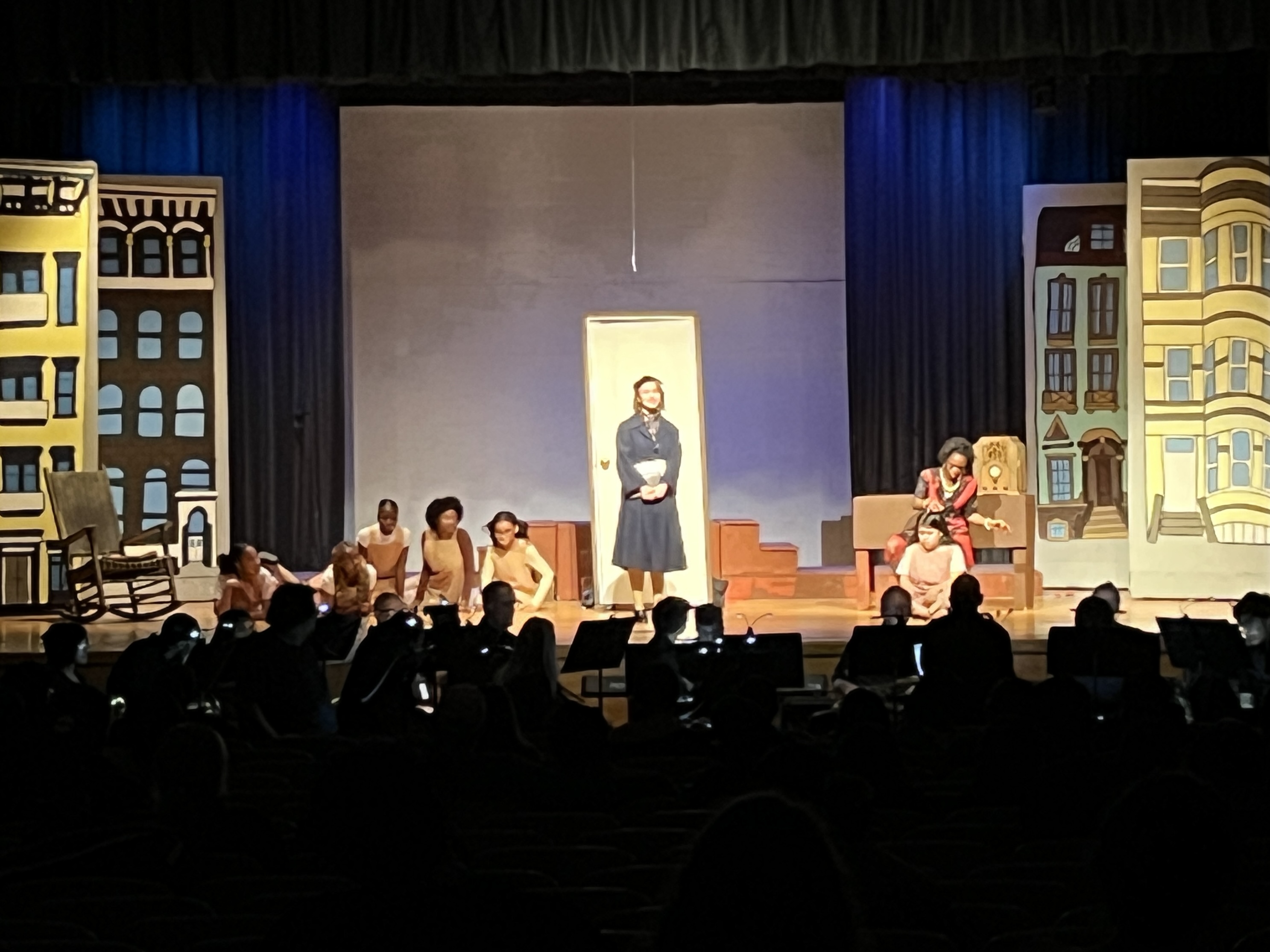
Opening night was a flurry of high-intensity. After a long school day, exhausted people (young and old) did their jobs, running on fumes and adrenaline. The show ran smoothly, with minimal hiccups (although there’s always a few).
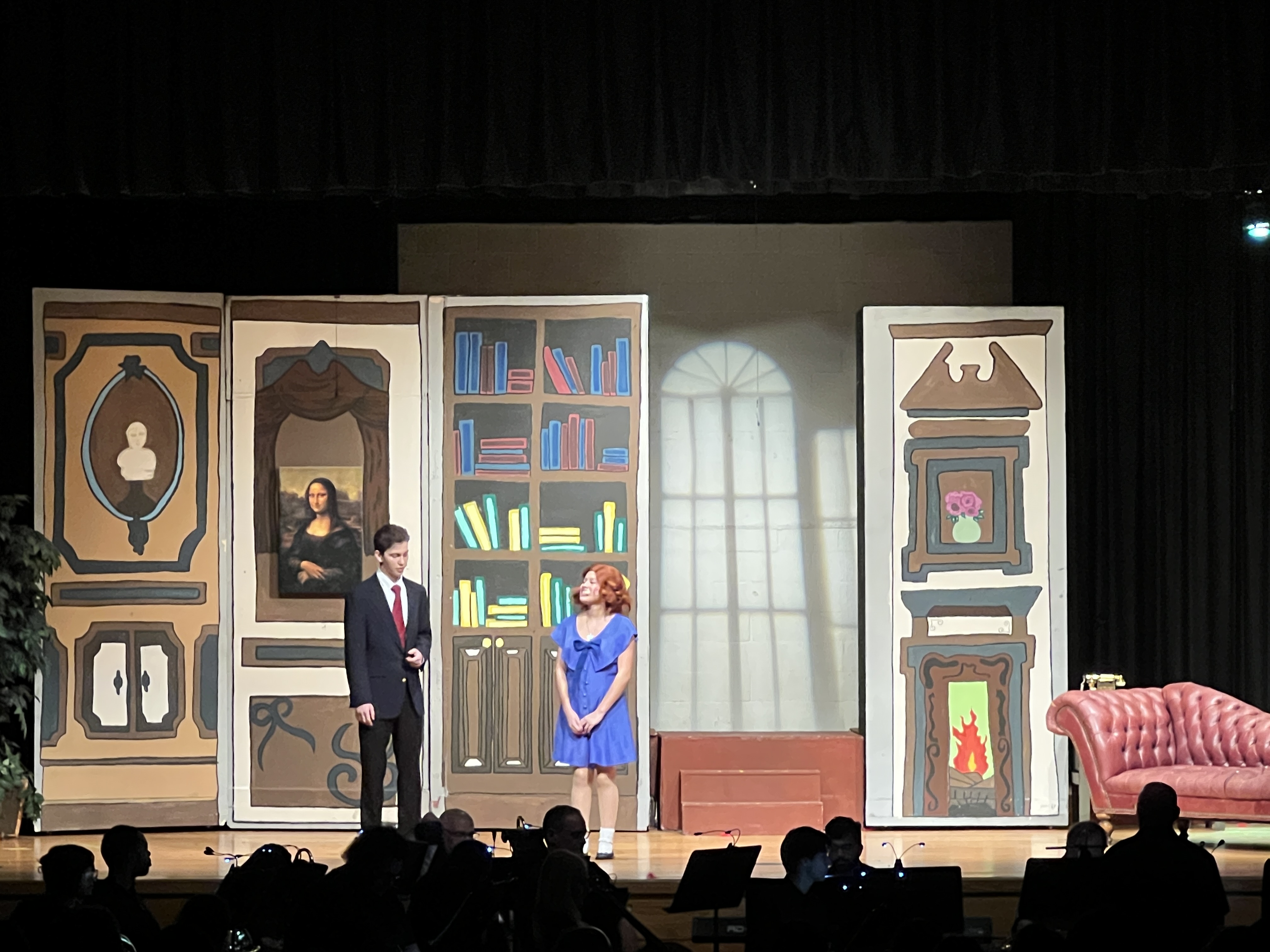
Our Annie, after her quick change into her iconic red dress, had a dangling microphone pack to manage onstage while singing and dancing to “I Don’t Need Anything But You.” Like the pro she is, she fixed the issue and never missed a beat.
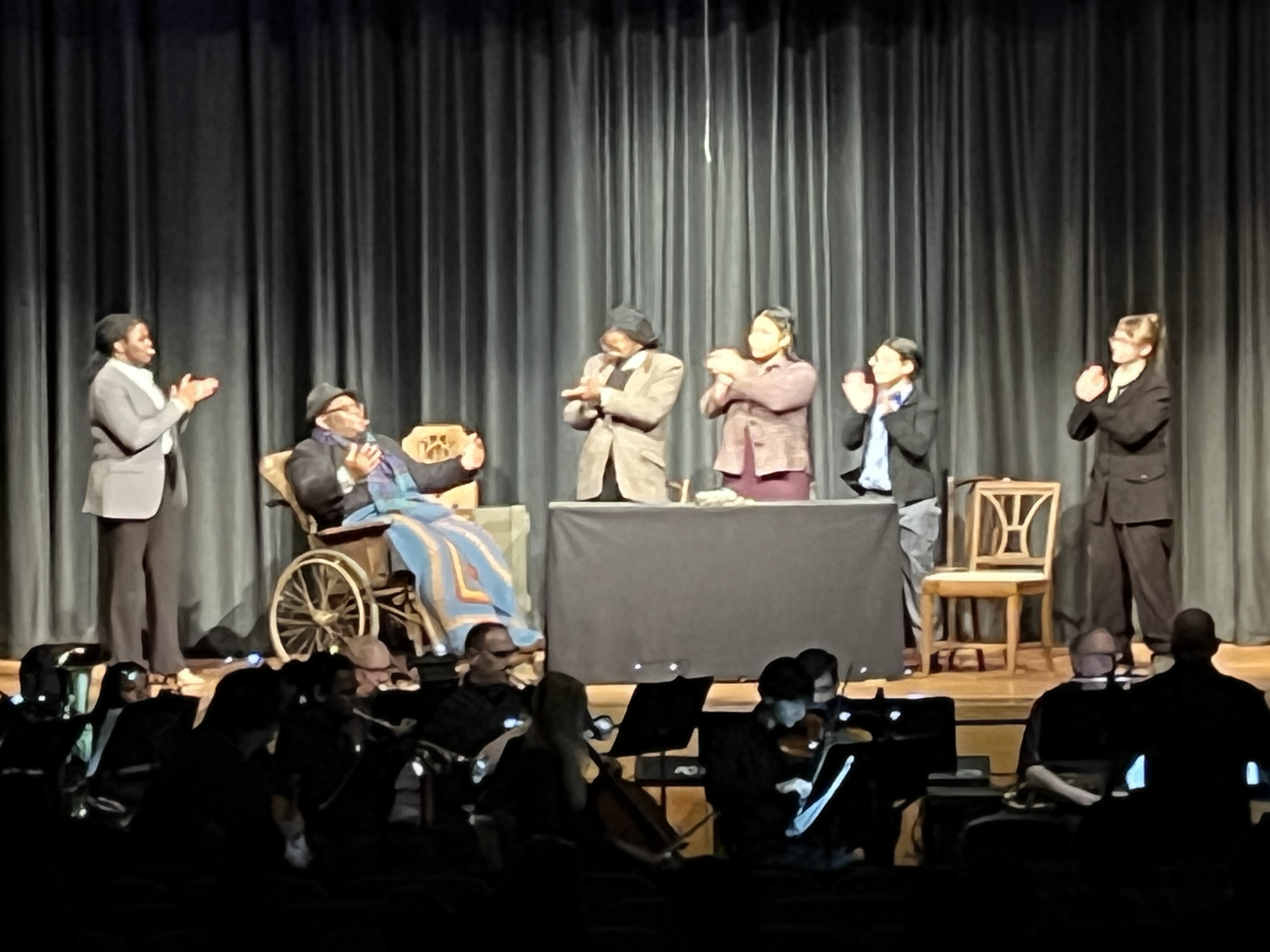
The inevitable orchestra blips, missed lines and body microphone gaffes were handled with grace. The word of the month was “consistency.” It’s the mantra we instill in them so that when these unexpected twists happen, they can jump right back on track and keep the momentum going. The best part was that the kids had each other’s backs for every bump in the road. One had a brain fart, their scene partner casually got them on track. A set piece was slightly askew, another person nudged it in place. There was no bickering or pointing fingers. Instead, they had each other’s backs.
We were all laser focused on one notion: Make this show better than the night before. And do it with a smile.
The countdown begins
An hour before showtime, on cue, the cast lined up onstage for body microphones. They buzzed and hugged and laughed. They helped each other secure their packs and tape the wire to their faces. It was organized chaos, but it worked. They leaned into the training they received and knew the drill. They did it faithfully, because they knew the system worked for them. They’ve all experienced systems that don’t work and they appreciate the things that do.
Thirty minutes to curtain: cast warmups. Our music director gives last minute reminders not to force it, to keep drinking water, and sleep. In the midst of the scales and arpeggios, he proclaimed, “What’s that I smell?” The kids answered: VICTORY! and he pounds his chest. I smiled. It’s his pre-show mantra that never fails to inspire. They knew how much they have improved in three months. In our first rehearsal, they were excited but tentative. Fifteen minutes to curtain, it was a different vibe. Fear wasn’t in the driver’s seat. The kids knew their job and were ready to execute.
Ten minutes to curtain: time to circle up. Diction warmups, focus exercises, and last minute reminders. Watch for the sophomore slump. Review how thy expertly handled some blips. Praise them for the efforts made and the growth achieved. They were ready to shine, once again.
Places call. I walked in the theater, and see many friendly faces of the past. Hugs, small talk, rush to the back to get the show started. Check with my tech leaders backstage and in the booths on headset. They were ready too. Like a runner at the starting block, they assumed their positions for the show to begin.
Curtain up!
My kids are the dictionary definition of consistency. This performance was the same as yesterday and the day before. The habits were locked in. It took three months of daily rehearsals to make that happen. And in three days, they proved that regular high school students can act just like the pros do. And they did it with no prior training, knowledge, or experience in the theater.
How? They felt the magic build. One day at a time, they practiced, made mistakes, learned from them. We told them when they faltered and what they needed to do to fix it. Most importantly, we did it with love. That’s the key. If kids are to learn from adults, they need to trust that what they are being told to do to improve is in their best interest. They need to feel that in their heart. When we stood in our closing night warm up circle, I saw the tears welling their eyes. I had their rapt attention, I knew they felt it. Onstage, they were warriors.
I sat on the headset, started the show, and let them take it away. My stage manager Carlito, who barely spoke a word of English two years ago, was bustling around, giving orders, leading the backstage action. I like to think that his English improved immensely after his first onstage experience with Thespians two years before.
Read Translanguaging in Arts Education to learn about Carlito's first show experience and how we navigated the language barriers.
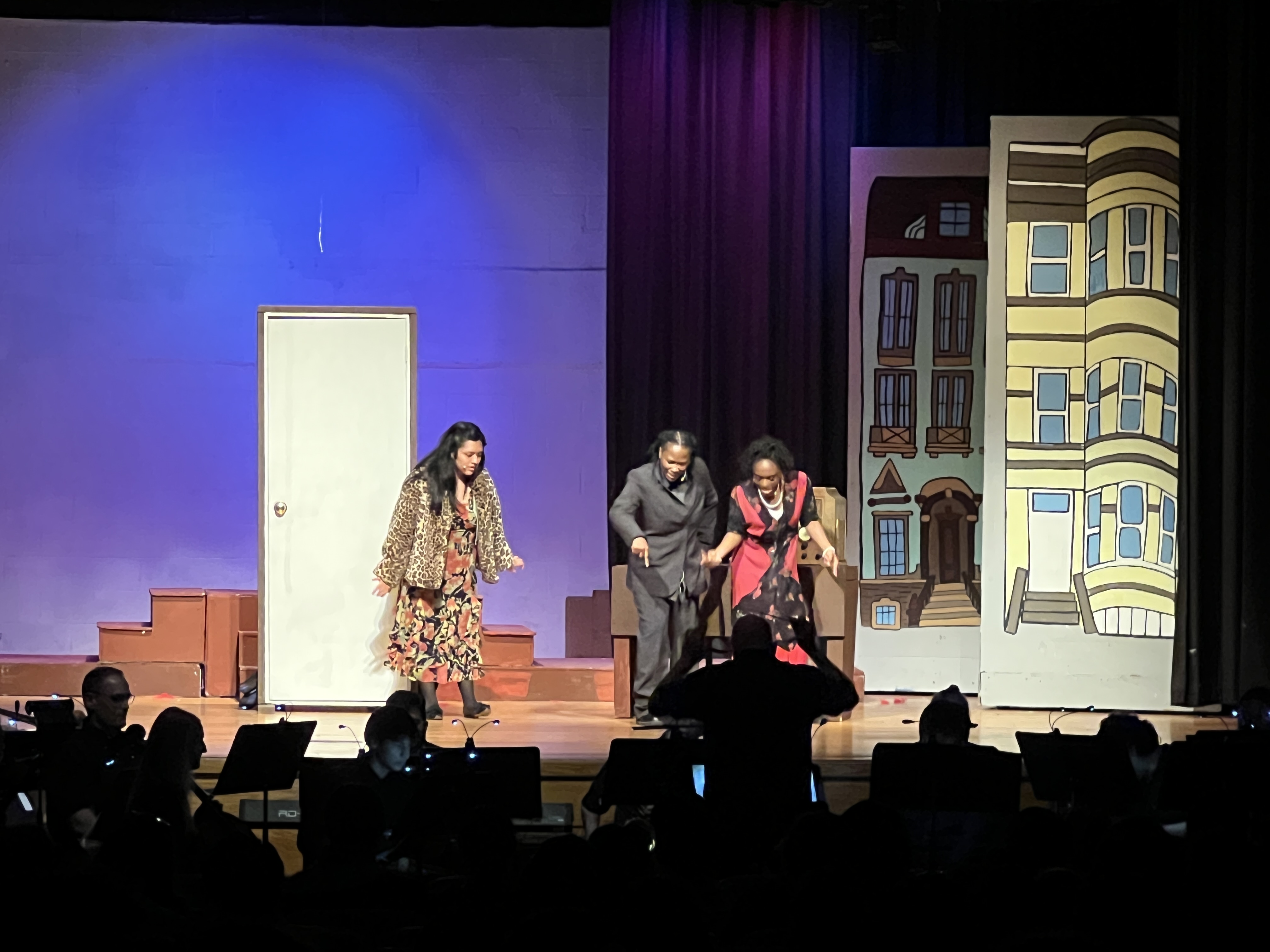
I listened to their chatter on headset, moments of panic and fixes for near disasters. I’d praise them all for the perfect, beautiful moments that they did all by themselves. Every student took complete ownership of their roles and did their part to achieve an evening of excellence in theater.
That is precisely the point of why arts in education is the most invaluable program we can offer to students.
Read Changed for the Better: the Value of Arts in Education for a more in-depth look about that why.
I love to see the actors immersed in their characters. In the end, if seems like it was written in their DNA, just waiting to emerge. Same for the musicians and technicians. As I pulled back from the controls, the change in ownership from the adults to the students occurred. That’s the moment that keeps me coming back every year with renewed vigor. I love being witness to that transition.
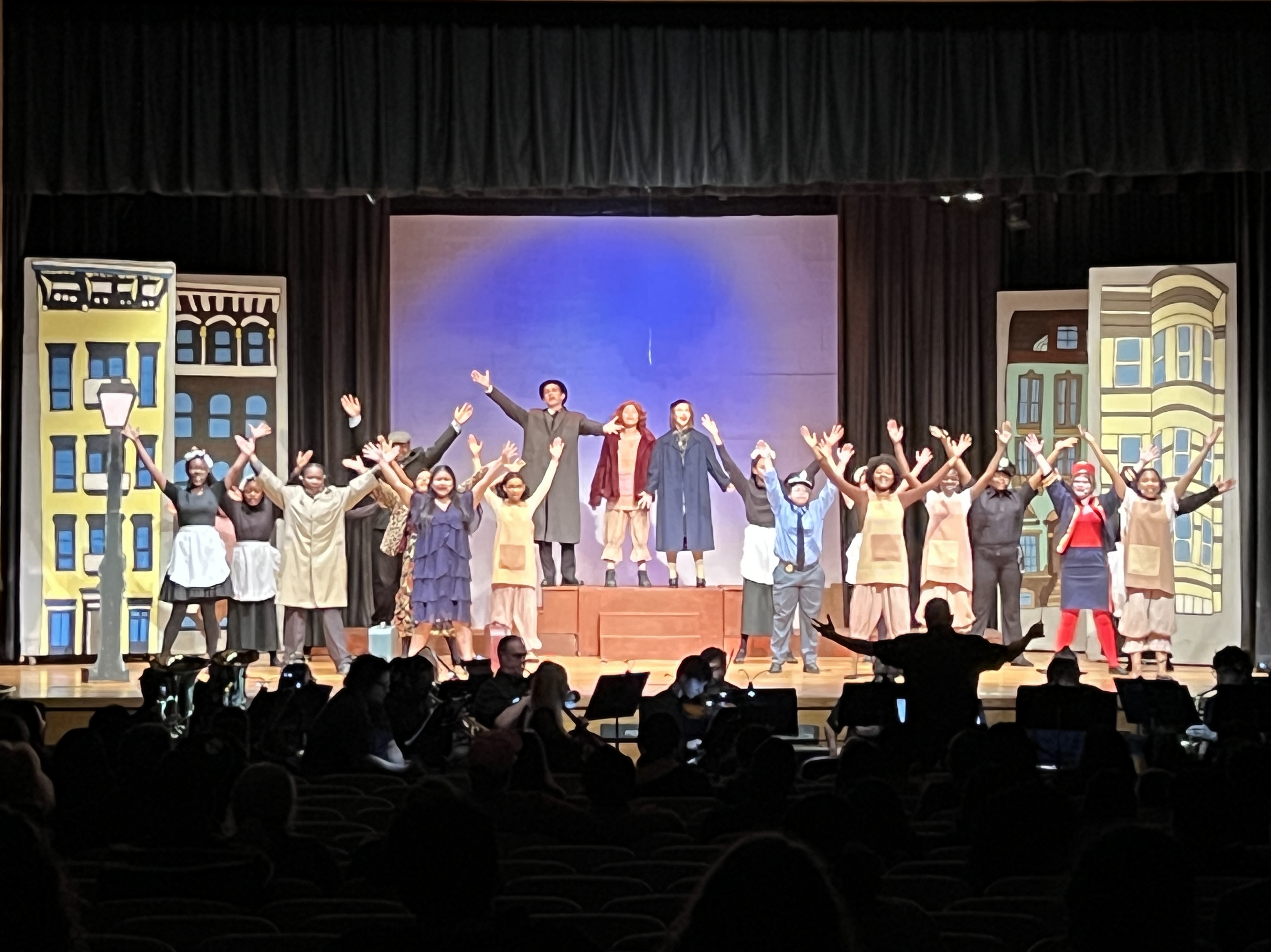
Throughout every scene, our audiences saw the magic, without any knowledge of what it took to make it happen. But our kids knew. Especially during the instant standing ovation at the curtain call, when the entire audience sang brightly along with the final rendition of Tomorrow, tomorrow, I love ya, tomorrow, you’re only a day away. These are the moments our kids will remember for the rest of our lives.
Another season in the books
I look at ANNIE 2026 as the Renaissance of Thespian Troupe 721. The pandemic almost shuttered our program, and it took a ton of clawing our way back to the wealth of greatness. There’s more to do, of course. But for the moment, I can step back and absorb the victory.
This was the culmination of my 31st season with Thespians. It’s hard to believe, but I have one more to go. Then I will pass the torch along to my co-director, Bridget Renne. She has been carefully studying all the chess moves, learning the systems and what these kids need to make the magic happen. We have made sure the kids know that she is the future of Thespians, and they will be in good hands when I walk away.
Will it hurt? Sure. Is it necessary? Absolutely.
You can read some more of my arts education stories here.

 Stacey's Headspace
Loved it. Let’s hope that more and more students want to join our group,
especially males.
Iris
LikeLike