

In this blog, I’ve been exploring a lot about nutrition in perimenopause. So far, I’ve covered bone health, cholesterol, weight maintenance, and phytoestrogens. This post is focused on increasing protein and building lean muscle mass.
One of the experts I’ve been following is Dr. Mary Claire Haver. Her website The ‘Pause Life posts fantastic science-based content to help women understand the menopause transition. I have learned so much from her and her colleagues, collectively called “the Menoposse.” They have shed light on the growing body of research supporting more effective and affordable healthcare for women.
The Menoposse actively debunks a lot of pseudoscience, opinion, and lies surrounding women’s health, fitness and nutrition. Most of the junk tries to get us to believe or buy something. Even worse, much of what’s out there ignores the needs of women trudging through the menopause transition. If you are over 35 and you haven’t heard of Dr. Haver and the docs in the Menoposse, I highly suggest you look them up.
For this protein-related post, I refer you to one of Dr. Haver’s blog articles called The Power Of Protein and Resistance Training. It’s a detailed overview about the importance of building muscle mass safely as we move into this half of life. All of her posts are thoroughly researched and list all sources. They are also free to read.
There are two things to focus on for building muscle: resistance training and protein consumption. This article discusses the recommendations offered by Dr. Haver and how I am working to follow them.
PART ONE: Resistance Training
I’ll admit, I’m not a muscle-head. I don’t love going to a regular gym and lifting weights. Frankly, it’s boring. I’d much rather spend my time flipping and inverting. But, I believe in the importance of building strength. Ample muscle mass is required to support the activities I love to do. Thus, I make my weight-lifting sessions targeted, short and efficient.
What’s the recommendation for peri women?
Basically, we need to push and pull more than we are normally used to. That’s what we physically need to build lean muscle mass. How much we lift depends on our health and current fitness level. Dr. Haver’s recommendation is this:
Aim for exercising each muscle group
with 1 to 3 sets of 8 to 15 repetitions for each exercise a minimum of two days a week.
This recommendation means different things for different people. There are two main themes that I think about when I exercise:
THEME 1: Failure shouldn’t be an option
If you’re just beginning, you simply need to do more than you’re used to. If that means walking and starting with body weight exercises, so be it. As your body acclimates to one load, you increase the challenge a little at a time. You don’t have to go to muscular failure to make improvements, especially in the beginning.
I’ve been exercising in some capacity for most of my life. I never work to actual failure. I hate the awful feeling of being sore for two days after a workout. If you are useless the next day and can’t move well, you’ve done way too much. That level of pain is also extremely discouraging to people just starting their fitness journey.
“Feel the burn” and “no pain, no gain” is a load of bunk. I don’t need to walk like Frankenstein to feel like I’ve done something in my workout.
THEME 2: Keep it varied
As humans, we are capable of moving in a variety of ways. To support this, our workouts should always include a variety of movement challenges. All of our muscles and joints need to withstand stresses under multiple angles and load to increase their functional abilities.
While we are in perimenopause, we have an easier time building muscle strength than once menopause has occurred. Now is the time to explore the ways how we can make strength training a habit. There are countless options, whether it’s joining a class, fitness center, or creating a home gym.
Putting it into practice
These are the main ways I put this into practice: at work, at home and at the gym.
Strength at work
As a high school dance teacher, I demonstrate all movement activities for my classes. Over and over again. Fortunately, I also have access to a fitness center. When I have a few extra minutes, I’ll use equipment that I don’t have at home. For example: assisted pull-ups, lat pull-downs, seated rows, heavy weights and leg presses.
When I use the equipment, I try to do two sets of ten reps of each exercise. It’s easy to remember and doesn’t take forever. I also don’t go to failure, because I have to use my body all day. I can’t wear it out too early. In that respect, I have built significant endurance for using my body in many different ways.
Strength at home
My husband and I just bought a handheld weight set and bench from CORE Home Fitness.

What’s cool is that it’s compact and flexible. Each dumbbell has ten five-pound weights. You click the handle and choose what weight you want to use, then lift it out of the stand. It’s really easy to use, so I don’t have to go to a gym for most exercises. This video demonstrates some of the stuff I do at home, even as I’m recovering from Achilles tendon repair surgery.
I also do a bunch of body weight work: push-ups, abs, straight leg lifts, etc. In addition, mobility exercises have kept my joints in much better shape. I’ve considered purchasing a weighted vest for wearing around the house, but I’m not there yet.
Strength at gymnastics
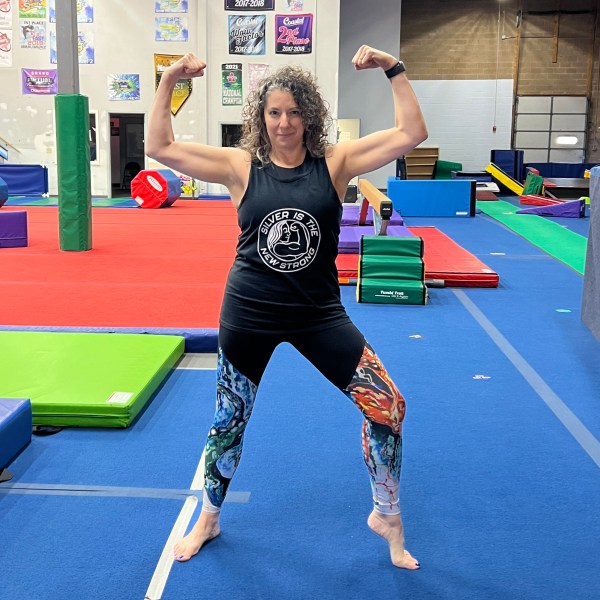
I have a lot of strength-building opportunities at my gymnastics gym.
I use resistance bands to help with pull-ups on the bars. Sliders help with dynamic body weight exercises. There are lots of mats and trampolines for plyometrics. Inversions (handstands) are fantastic for arms and shoulder strength.
I am fortunate to have all of these options at my disposal. Together, they provide a wide variety of challenge that covers all of my movement needs. I don’t get bored and I can try new exercises whenever I get inspired.
PART TWO: Protein Intake
When you start increasing your activity, proper nutrition is essential. Adequate protein intake goes hand in hand with lifting heavy things. You must supply your body with enough protein to support muscle growth.
When actively building lean muscle mass, Dr. Haver has this recommendation:
1.5-1.8 grams of protein per kilogram
of your lean body mass.
She explains that this is your “preferred body weight, where you feel your best.”
She also provides a protein calculator so you can easily figure out your intake range. It does the math for you. Simply enter your preferred weight (in pounds or kilograms) and your activity level.
How much do I need?
I plugged in my information for my preferred body weight. The recommendation was 139-155 grams of protein per day. That is a LOT of protein, by the way. Most days, I don’t think I actually reach that amount. It’s tricky to find that many lean protein sources, short of eating a giant chicken breast three times a day. No, thank you.
Reconciling the recommendation with reality
I will not be gnawing on a chicken breast every day. Instead, I have prioritized eating protein with each meal and snack.
The good news is that protein is really filling. Here’s the secret to not being hungry:
- Make the bulk of your calories leaner protein sources.
- Make sure your carbs include a good fiber source. (Here’s one of my earlier posts all about fiber.)
If you can re-calibrate your food choices over time, you really won’t be hungry. Lean protein combined with fiber (minimum 25 grams per day) does wonders for satiety. Adding water to the mix helps too.
Given this recommendation, the beginning of my day focuses on getting a big protein boost. Every morning, I make my own version of a protein shake. Below, I share the products I use and their nutrition content. (I have no deals with any of these products. It’s just what I’ve found over time.)
My Morning Protein Shake Ritual
I pair the protein shake with a piece of fruit. This ritual really simplifies things. I always know exactly what I’m going to eat. Preparing it has become part of my morning routine.
Below are the main ingredients I use and the nutritional information for each one. I’ve also provided an Amazon link to each, but you can find these items elsewhere. Find the best price, of course.
| Ingredient | Serving size | Calories | Protein (g) | Fat (g) | Fiber (g) |
|---|---|---|---|---|---|
| Silk Soy Milk (unsweetened) | 1 cup (240 ml) | 80 | 7 | 4.5 | 2 |
| Vega Chocolate Protein Powder | 1 scoop (33 g) | 130 | 20 | 2.5 | 2 |
| Chocolate Collagen Peptides Powder | 1 scoop (13.5 g) | 45 | 10 | .5 | 1 |
| Nutricost Performance Creatine Monohydrate | 1 scoop (5g) | – | – | – | – |
| PB Chocolate Powder | 1 Tbsp | 25 | 2 | .5 | .5 |
| Viva Naturals Organic Psyllium Husk Powder | 1 tsp | 10 | 0 | 0 | 4 |
| TOTALS | 1 Shake | 290 | 39 | 8 | 9.5 |
To these ingredients, I also add:
- 1 tsp espresso powder
- a few shakes of cinnamon powder
- 1 tsp of chia seeds (sometimes)
- a sprinkle of clove and/or ginger powder, depending on my mood
Everything goes in a 2-cup shaker cup. I add a few ice cubes and fill it to the top with water. Then, I shake it like a maraca. No joke, it gets me through the morning. It’s quite filling, and with a piece of fruit, it’s under 400 calories and provides about 40 grams of protein. That’s about 35% of Dr. Haver’s recommendation for building muscle mass.
It’s a really solid start to my day.
Snacks with protein
Snacking is always tricky. When I’m working, it’s got to be quick and easy. Unfortunately the wrong quick and easy choice can be filled with fat and sodium. Those two ingredients that I do not want in large quantities.
These are some of my go-to snack choices when I’m looking to add protein to my day:
| Snack | Serving size | Calories | Protein (g) | Fat (g) | Fiber (g) |
|---|---|---|---|---|---|
| Oikos Pro vanilla yogurt | 5.3 g | 140 | 20 | 3 | 3 |
| Kodiak Chewy Granola Bar-chocolate chip | 1 bar | 140 | 7 | 3.5 | 2 |
| Clif mini peanut butter | 1 bar | 110 | 5 | 3 | 2 |
| Activia dailies vanilla | 3.1 oz bottle | 70 | 3 | 1.5 | <1 |
| Kodiak Peak Protein Oatmeal Maple & Brown Sugar | 1 packet | 290 | 20 | 5 | 5 |
| Mixed nuts (no salt) | 1/4 cup | 165 | 4 | 16 | 3 |
A few words about some of these snacks:
- I’ll have the protein oatmeal as a snack or a meal before I go to the gym at night.
- I happen to love nuts, but I’m aware of their fat content. I’m also aware of their antioxidant properties, so I’ll balance the fat for the other good things they are. Plus, they’re really tasty and they make me happy.
- The Activia drink has a lot of probiotics. It’s also tiny, so I’ll have that with fruit or a granola bar.
Lunch and Dinner
I’ll eat just about any type of food, as long as it’s prepared well. Lean meat is often the prime protein source, but there are plenty of veggie sources that provide protein.
High-Protein Carbs
Whenever I make pasta, it’s always the high-protein kind. The Barilla Protein+ is my go-to. It has 10 g of protein, 1 g fat, 5 g fiber and 190 calories per 2 oz serving.
I love Dave’s Killer Bread 21 Whole Grains and Seeds. Two slices has 12 g protein, 8 g fiber, 3 g fat and 220 calories. If I want to make a meal, two large eggs adds 140 calories, 12 g protein and 10 g fat. Quick, easy, and satisfying.
Veggie-Based Protein
I make a grain salad that lasts a long time. It’s perfect dressed with balsamic vinegar (light and dark) and olive oil. You can add whatever you want to it, but these are the base ingredients:
- Lentils (1/2 cup has 9 g protein, 0 fat, 8g fiber, 120 calories)
- Farro (1/2 cup has 8g protein, 1 g fat, 6g fiber, 170 calories)
- Flax Seeds
- Sunflower seeds, Pistachios, Slivered Almonds, Pumpkin Seeds
Of course, black beans, chick peas, tofu, peas, edamame and all good options for me.
Just like our workouts, our food should include a variety of food sources. A variety of color and texture will cover your nutritional needs.
Making long-lasting changes
Making dietary changes can be hard. If you’re able, I highly recommend seeing a nutritionist, at least to get started. If that’s not in the picture, these are my suggestions for reshaping your diet:
- Hone in on the foods you currently enjoy.
- Identify which of those provide the most “bang for your buck.”
- Prioritize those foods, add in some new ones, and save the “less nutritious” stuff for occasional treats.
- Pay attention. Use a tracker for a reality check. Cronometer is a good one with plenty of free and useful functions.
- Forgive indiscretions. Make a more nutritious choice for your next meal.
- Take your time. Don’t think that you can overhaul your habits overnight. Pick and choose what changes you want to make, and tackle them in small bits.
Making changes to your habits doesn’t come easy or quickly. All of these things took years to incorporate into my daily routine. I stay vigilant and aware of my choices and make adjustments as I need to. Don’t try to do everything at once. Add something new, adjust, and then add or change something else. Over time, the new things will just become a part of your daily life.
I wish you the best of health and happiness in the new year. Drop a comment if you’ve made any changes for the better!
SOURCES
These are two of Dr. Haver’s blog posts that you can read for yourself.
The Power Of Protein and Resistance Training
The Power of Fiber
These are two studies I found about strength training. There are so many to sift through, but these were interesting.

 Stacey's Headspace
Again, very interesting and very informative.
Iris
LikeLiked by 1 person