

How do we build the courage to do hard things? Do we see ourselves as competent and able to tackle the challenges? In this post, I discuss how a strong support system bolsters a confident training experience.
Original post: January 2022. Revised: June 2025
In psychology, there’s a theory called self-concept maintenance (Ackerman, 2019). The idea: we take an active role in shaping who we are, based on our knowledge of ourselves and our feelings about that knowledge. It also takes into consideration the impact that others’ perceptions of us has on how we think about ourselves.
The rut of impostor syndrome
In my teens and twenties, I (like most others) struggled with feeling comfortable in my own skin. There were things I was passionate about and that I loved to do. But, I didn’t feel firmly rooted in my abilities to claim any real expertise in those pursuits. I always felt a little behind the eight-ball. I saw others’ big achievements and it was hard to embrace my own accomplishments as having enough merit.
The nagging self-doubt of impostor syndrome crept in from time to time.
I was always afraid that someone would discover my secret that I wasn’t enough.
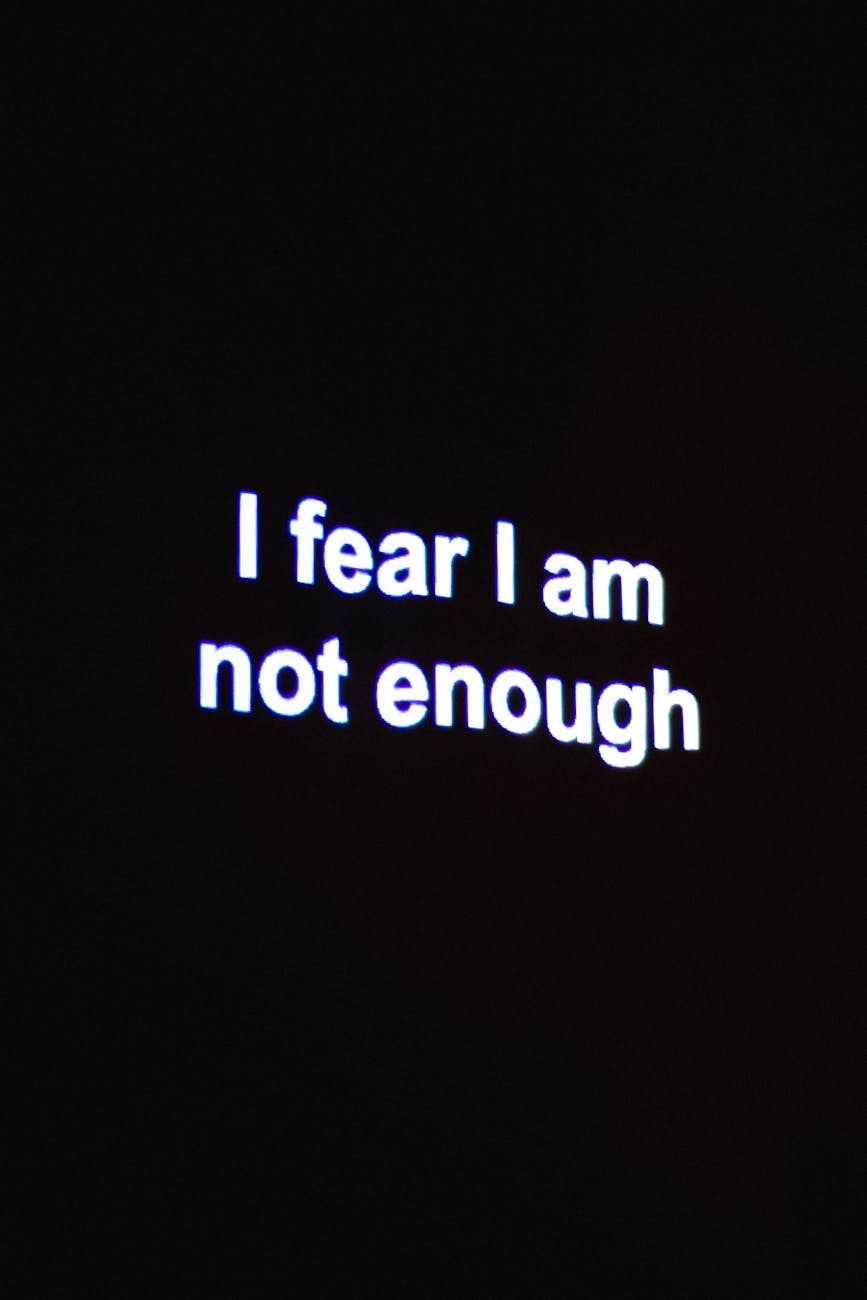
I was often just winging it and praying things didn’t collapse in an embarrassing mess. I definitely did not give myself enough credit for the gifts I brought to the world.
That self-doubt quietly crept into my adulthood.

As The Geriatric Gymnast, that insidious mental buzz sounds like this:
You have no business doing this thing that teenagers do. How long can you possibly keep this up? There’s so much you don’t know; how can you effectively coach others?
Those murmurs can turn into a cacophony of anxiety and doubt if we let them take over.
Combating doubt with grace
It’s hard to look around and see others with more skill than we have. We tend to compare their abilities to ours and it’s easy to judge ourselves in an unflattering light.
Maintaining a healthy self-concept is about fighting that uphill battle. It’s about shining more light on what we have to offer.
After five decades of living, I have embraced the mantra progress isn’t linear.
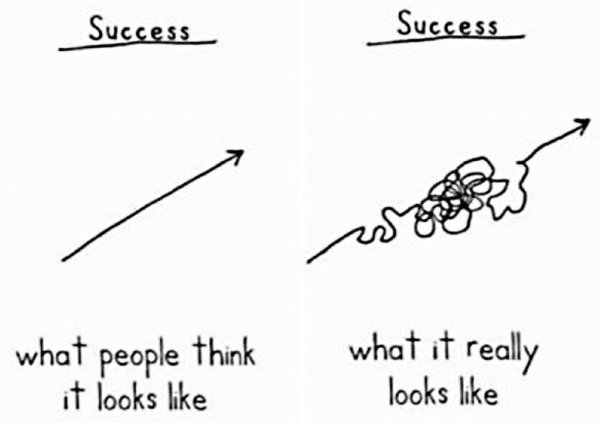
No matter how much experience, how many degrees or skills we have acquired, we are on our own learning continuum. We will never know everything there is to know in our fields of expertise. Keeping that in mind releases some of the mental pressure.
Shifting our mindset is key to that release. Instead of assuming we must know everything, we can embrace the notion that there’s always more to learn. Someone else will always know or do something better. Our power is in our ability to absorb more knowledge every single day.
Our best offering
In that quest to learn more, I have embraced another important truth:
No one can offer me better than me.
Through my years as an educator and coach, I have taught thousands of people. I have added so many abilities to my personal life skills cache. I have learned that I need to place a higher value in my accumulated experience.
This is my second act focus: the future development of my self-concept lies in offering the best version of me.
How do I do that?
I observe, listen, teach, try new things, write, share my thoughts, and continue learning from the world around me. What I learn, I turnkey out to my community. When you allow yourself to try, fail, try again, and maybe succeed sometimes, it provides opportunity for unlimited growth. That growth translates into stronger experience, which in turn, boosts your overall self-concept.
We need to enjoy every curve of that squiggly line to success. It’s sweetest when you can do it with others.
Building a strong scaffold of support
Personal experience has extraordinary value. We learn by doing and sharing that experience with others. Our self-concept is upheld best with solid support from the people we love and work with. From a Geriatric Gymnastics perspective, that support comes from many places.
Through my eyes, this is what that support looks like:
Good coaches
Good coaches respect your worries and limitations, and give you tools and advice when you are ready to move forward. Even when you’re not sure you’re ready to move forward, they encourage and reinforce your ability to succeed. They watch you carefully and identify elements that need specific improvement. They keep you safe as you take a risk.
Coaches can be official or unofficial. Over the years I’ve trained with people who have offered their expertise and sage advice. They paid forward the things that helped them in their journey.
In my first gymnastics post, I am a gymnastics addict, I talked about Lisetta. She was one of the first women who welcomed me into the adult cult in my first year of training. She offered a phrase that I still use to this day. Every time I do a handspring, I remember scrape the ceiling with your toes. It doesn’t make much sense to non-gym people. But, as a rule for gymnasts, it gives you the most beautiful body line when you invert heels over head. Whenever I apply that lesson, it makes me a better gymnast. I have paid that advice forward countless times.
Loved ones
When your family supports you wholeheartedly, it makes the challenges so much easier to bear. I can’t count how many times I’ve come home with aches, pains and injuries (minor and major).
Despite the complaints, the random injuries, and icing of body parts, supportive loved ones don’t question your life choices. Instead, they trust that you are making the best decisions for yourself. If you are hurt, you are working to heal yourself. They think it’s pretty awesome that you’re even trying this crazy stuff. They watch all your videos, even though they’ve seen all the skills ad nauseam. While they worry about you, they respect that this is something you do for yourself, despite occasional physical setbacks.
Geriatric Gym buddies
At the gym, my gym-rat adult cult friends are best support system. These are the things that contribute to my positive self-concept:
- When Lauren called me the GOAT because of some convoluted trampoline combination I did that day.
- When Gina believed in my ability and kept pushing me to try new things.
- When Tammy devised clever drills to help facilitate forward progress.
- When I land a new skill and my classmates applaud.
- When I pass along my own sage coaching advice to someone, they take it, and they instantly improve.
When Tammy, Lisette and I drive 12 hours to sleepaway gymnastics camp, and that’s a normal thing.
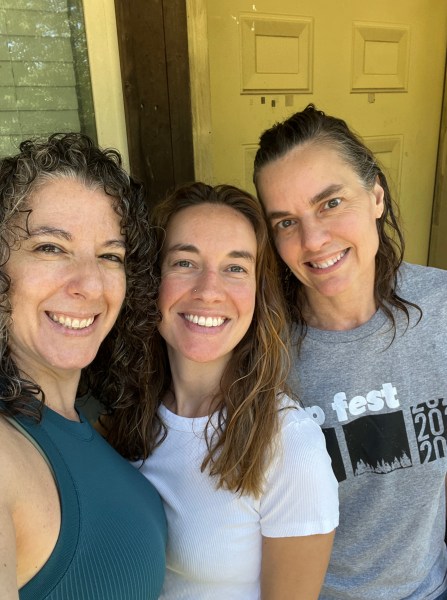

There is an inclusive, family feel to every class.
We all want each other to succeed. We want everyone to feel that sweet, fluttery feeling in our chest when we finally land on our feet. It’s because we are all in the same boat. We are participating in something that most of us have no business doing, and we’re doing it anyway.
Falling on your ass is so much better when you can laugh, get back up and try again with your buddies.
Friends on the outside
Adding to the fun of sharing these experiences with friends in person is finding your online network. In Flipping For All To See, I talk about sharing my progress on social media.
There’s something sweet about receiving random messages saying how much people enjoy and are inspired by my gymnastics posts.
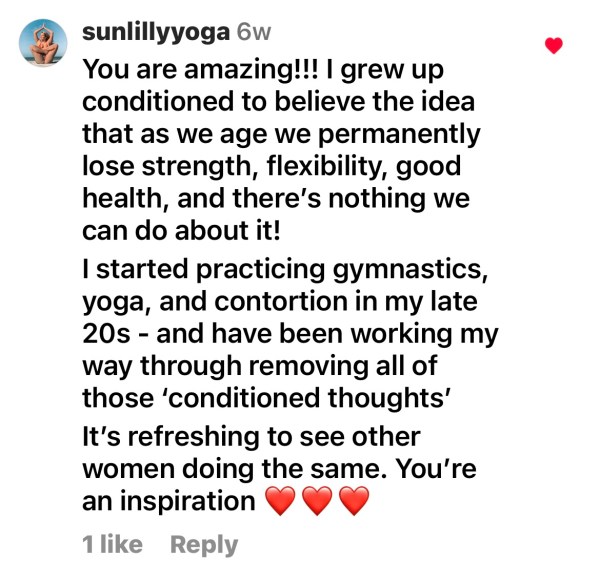
Fortunately, I don’t see a lot of haters, which is nice. Maybe it’s because I’m trying to present my authentic self, mistakes and all. I hope that people see themselves in my imperfections and realize that it’s okay to be human. We are doing really hard things in gymnastics!
Being kind to ourselves
I think it’s important to remember that we are the most important part of our own community. How we treat ourselves will impact how we navigate everything in our world.
I was talking to one of our adult gymnasts in class who tends to be very hard on himself. All of the logical discussion about progressions, drills, and taking our time was fine, but it wasn’t enough. But what he really needed to hear was that it was also necessary to be kind to ourselves.
Of course the validation and support from others is important. What’s more important to have patience and grace in our own learning process.
We will always make mistakes. We won’t always achieve the thing we want to, or think we should be able to. Setbacks can really chip away at our self-concept and confidence. That can easily lead us down a difficult training path.
What we need to remember is that in the end, our participation in this activity is for our personal enjoyment. We need to be a little kinder to ourselves when we face obstacles to our progress.
A questionable self-concept doesn’t end when you reach 20, or 30, or even 50. It gets quieter, for sure, but there’s always something ingrained in your brain that sows the seeds of self-doubt.
We must stop questioning our right to thrive on the path we have chosen to pursue.
We must not get derailed from those pursuits, even if we hit speed bumps.
I’m proud of my young self for deciding to be brave.


Her older self now looks for new challenges to pursue.
I’ve become good at figuring out what it takes to get better at those things. I have found the power in prioritizing myself and adding to my cache of gifts.
I am also eternally grateful for my support system. They have, perhaps unknowingly, validated and reinforced the self-concept I have been sculpting my whole life.

To read more about self-concept, click What is Self-Concept Theory? A Psychologist Explains by Courtney E. Ackerman, M.A. (2019).

 Stacey's Headspace
Go you! That’s awesome you’re doing all that! I find buddies help me be more active as well.
LikeLike
Indeed! Moral (and physical) support is EVERYTHING. Thanks for the comment!
LikeLiked by 1 person